
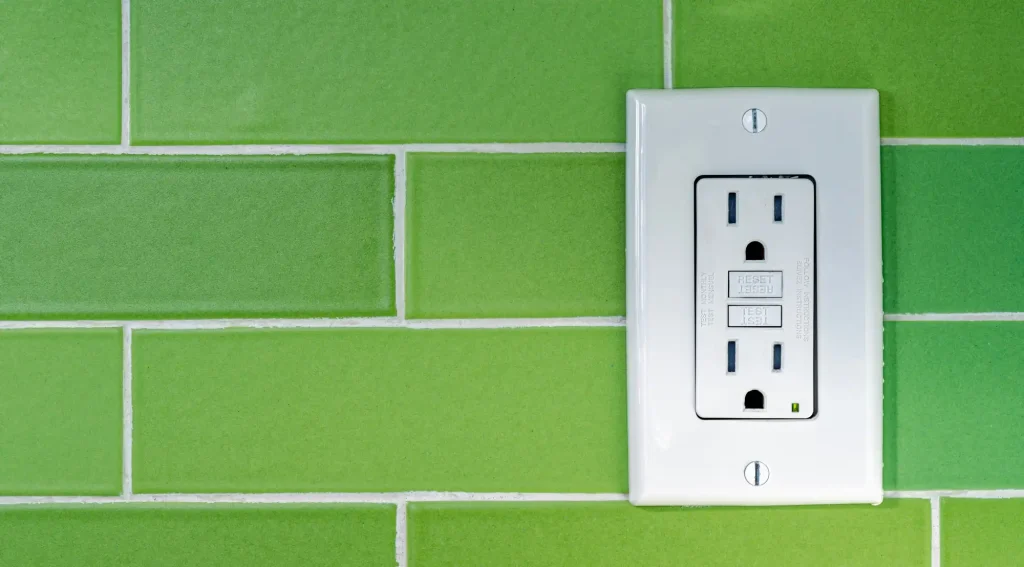
GFCI outlets are one of the most important safety features in your home. They shut off electrical power the moment they detect a ground fault, helping prevent electrocution, electric shock, and burns—often in less than a tenth of a second.
What Is a GFCI?
A GFCI (Ground Fault Circuit Interrupter) is a safety device that monitors the flow of electricity through a circuit. When it detects an imbalance—meaning electricity is taking an unintended path, possibly through a person’s body—it instantly cuts power before a serious injury can occur.
GFCI outlets are commonly found in kitchens, bathrooms, garages, and anywhere electrical devices might come into contact with water. Because water conducts electricity so easily, these are the areas where the risk of shock is highest.
What Is a Ground Fault?
According to the National Electrical Code, a ground fault is a conducting connection—whether intentional or accidental—between any electric conductor and any grounded material. Electricity always seeks a path to the ground. In a ground fault, it finds one it was never meant to travel—such as through a person’s body. GFCI protection exists specifically to interrupt that path before it causes harm.
How Does a GFCI Work?
A GFCI continuously monitors the difference between the amount of electricity flowing into a circuit and the amount flowing out. If it detects a discrepancy as small as 4 or 5 milliamps, it trips the circuit in less than one-tenth of a second—fast enough to prevent a lethal shock.
Where Should GFCIs Be Installed?
GFCIs should be installed anywhere appliances or power tools are used near water. Common locations include:
- Kitchens and bathrooms
- Laundry rooms
- Garages and workshops
- Outdoor outlets and areas around swimming pools or spas
Tap water and wet surfaces conduct electricity very easily and can connect your body to ground potential, increasing your risk of shock. Note that some appliances—like hair dryers—now have built-in GFCI protection as required by code, but many household appliances still do not.
How to Test a GFCI Outlet
GFCIs are electronic devices that can wear out or be damaged over time. Importantly, the outlet itself may continue to supply power even if the GFCI protection circuit has failed—meaning you could have a non-functioning GFCI without knowing it.
Testing a Receptacle-Type GFCI
Press the TEST button. The RESET button should pop out and power to the circuit should cut off. Press RESET to restore power and protection.
Testing a Circuit Breaker-Type GFCI
Press the TEST button. The breaker handle should move to the tripped position and power should cut off. Reset the handle to restore power and protection.
If pressing TEST does not cut power, have a qualified electrician replace the GFCI as soon as possible.
How Often Should You Test GFCIs?
All GFCIs in your home should be tested once a month. Portable GFCIs used outdoors with power tools—such as drills, lawn mowers, or trimmers—should be tested before each use.