
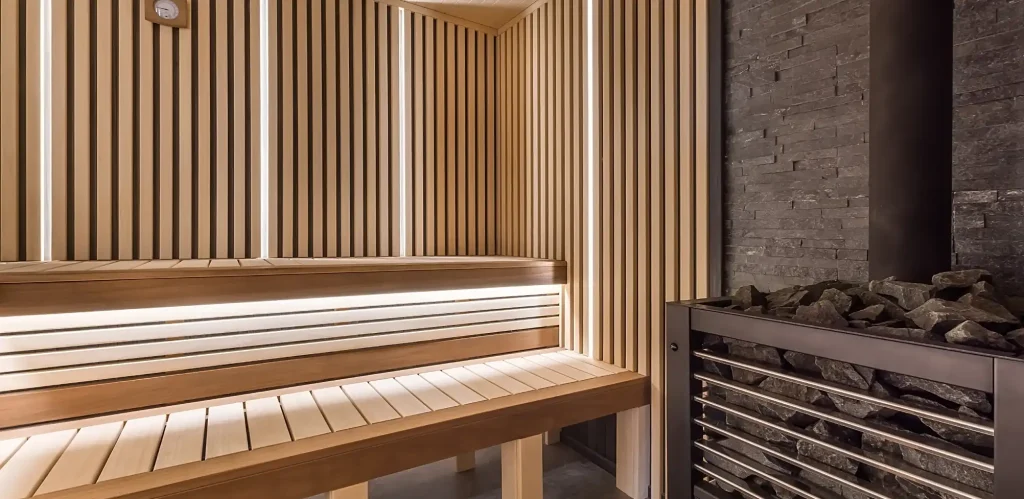
Adding a sauna to your home isn’t just about luxury—it’s about creating a personal wellness sanctuary. From boosting heart health to melting away stress, the benefits are backed by science, making it one of the most rewarding upgrades you can make. We’ve cited the sources below, but as always, consult your personal physician before starting a sauna routine.
Health Benefits of Regular Sauna Use
Regular sauna use mimics the effects of moderate exercise, giving your body a “passive workout.” Here’s what the research shows:
Heart Health
Studies show that using a sauna 4–7 times a week can reduce the risk of fatal cardiovascular disease by up to 50%. The heat improves blood vessel flexibility and lowers blood pressure naturally. Read the UCLA Health article →
Faster Muscle Recovery
Heat increases blood flow to tired muscles, flushing out lactic acid and reducing soreness—great for anyone active on weekends. Read the study on PubMed →
Deep Relaxation and Better Sleep
Saunas lower cortisol (your stress hormone) and trigger a release of endorphins, helping you sleep better and feel more resilient. Read the National Library of Medicine article →
Immune System Support
Raising your core temperature can increase your white blood cell count, helping your body fight off seasonal illness. Read the supporting medical article →
Traditional vs. Infrared Sauna: Which Is Right for You?
The biggest decision you’ll make is the type of heat you prefer—and it directly affects the electrical work required.
| Feature | Traditional Electric | Infrared Sauna |
|---|---|---|
| Experience | High heat (170–195°F) with optional steam | Gentle heat (120–150°F) that warms the body directly |
| Warm-up Time | 30–60 minutes | 10–20 minutes |
| Electrical Requirement | Dedicated 240V circuit (like a dryer or oven) | Often a 120V dedicated circuit for 1–2 person units |
Electrical Requirements for Home Sauna Installation
Installing a sauna requires more than clearing a corner in your basement or backyard—it needs professional electrical planning to operate safely and up to code. Here’s what’s involved:
Dedicated Circuit
A sauna should never share power with other appliances. A dedicated circuit is required to handle the load safely.
The Right Voltage
Small infrared units may plug into a standard 120V outlet, but most traditional sauna heaters require a 240V hard-wired system with a double-pole breaker.
GFCI Protection
Because saunas involve heat and often moisture, GFCI (Ground Fault Circuit Interrupter) protection is essential to prevent electrical shock.
Local Disconnect Switch
Most electrical codes require a safety shut-off switch within sight of the sauna.
Electrical Panel Capacity
Your home’s panel must have enough capacity for the additional load. A 6kW–9kW traditional heater can draw 30–50 amps, which may require a panel upgrade if your service is already near its limit.
Ready to start your home spa project? Contact Alker Family Electric to discuss your options.