Whether it’s a neighborhood-wide blackout or an electrical failure in your own kitchen, knowing how to react is about more than just finding a flashlight—it’s about keeping your family and your property safe. In this article, we’ll walk you through the essential steps to take during an electrical emergency, helping you identify when to wait it out and when it’s time to call in a professional.
Warning Signs of an Electrical Fire
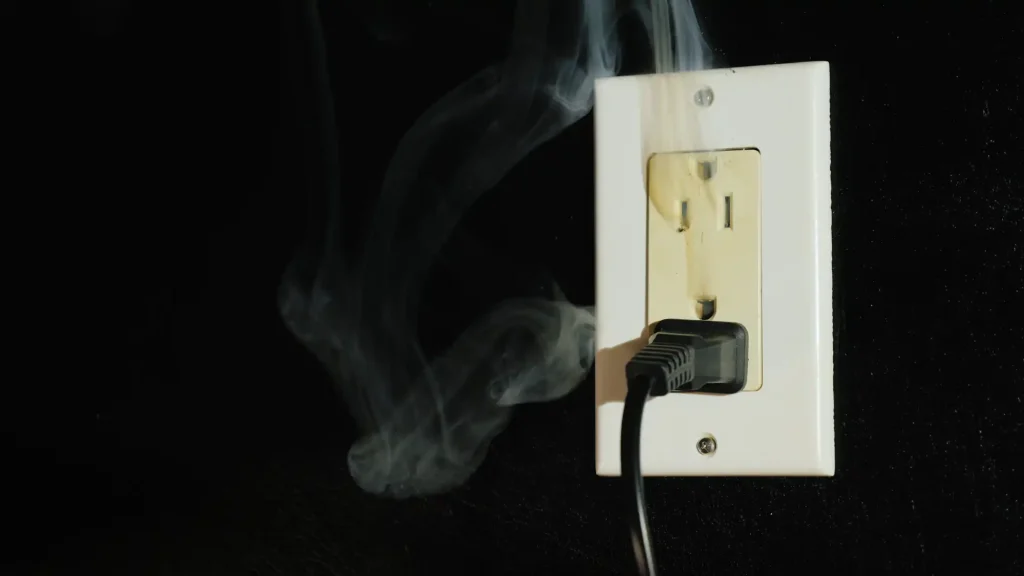
While a power outage is often just a nuisance, it can sometimes be a symptom of a much more dangerous problem. If your power goes out—or even if it’s still on but acting strange—keep an eye (and nose) out for these red flags that indicate a potential electrical fire:
The Smell of Burning Plastic
Electrical insulation is made of plastic or rubber. If it overheats, it emits a distinct, acrid “fishy” or chemical burning smell.
Buzzing or Sizzling Sounds
Your electrical system should be silent. If you hear humming, cracking, or popping coming from your walls or an outlet, there is likely dangerous arcing occurring.
Discolored Outlets
Look for char marks, soot, or a brownish tint on your wall sockets. This is a clear sign that the internal wiring has sparked or melted.
Heat from Walls or Switches
If a light switch or a section of your wall feels hot to the touch, it’s a sign that wires are overheating behind the drywall.
Persistent Flickering or Dimming Lights
If your lights behave like a strobe light before going out, it often points to a loose connection that could ignite a fire at any moment.
Important: If you see smoke or actual flames, do not attempt to investigate. Evacuate everyone from the building immediately and call 911.
What to Do If Power Goes Out During a Storm or Flood
Water and electricity are a deadly combination. Follow these steps to protect yourself and your home when an outage coincides with severe weather:
- If electrical circuits and equipment have gotten wet or are near standing water, turn off the power at the main breaker or fuse on the service panel. Do not enter standing water to access the main power switch. Call a licensed electrician to turn it off.
- Never turn power on or off—or use any electric tool or appliance—while standing in water.
- Do not turn the power back on until all electrical equipment has been inspected by a qualified electrician. All appliances must be completely dry before returning them to service.
- If you see frayed wiring or sparks when you restore power, or smell something burning with no visible fire, shut off the electrical system at the main circuit breaker immediately.
- Consult your utility company before using electrical equipment, including portable generators. Do not connect generators to your home’s electrical circuits without approved, automatic-interrupt devices. A generator running when utility power is restored can become a major fire hazard and may endanger line workers restoring power in your area.